


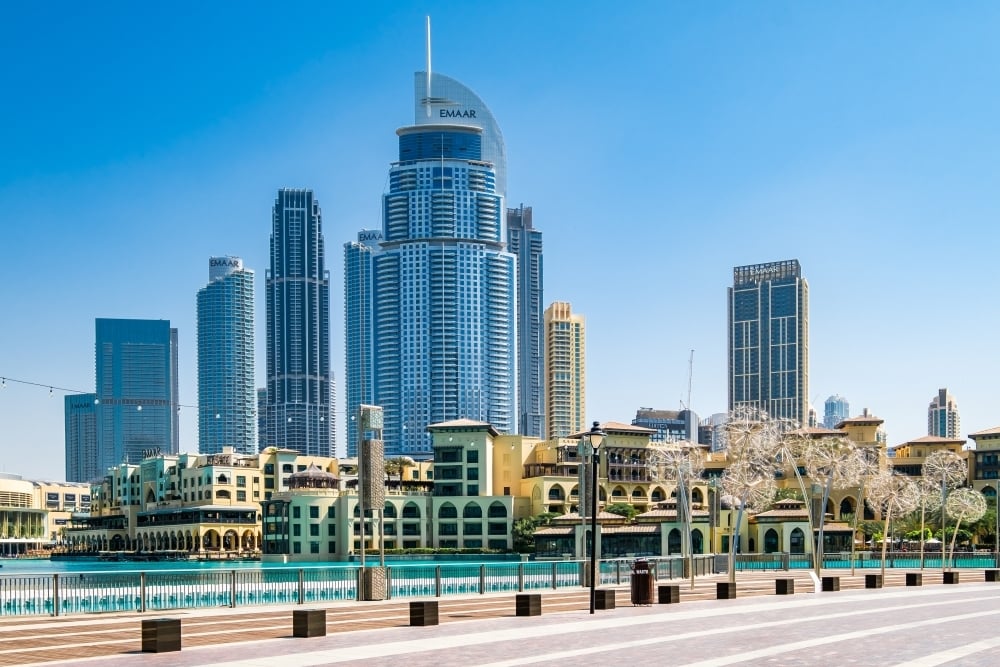
By 2025, Dubai has become one of the most internationalized labor markets in global hospitality — not as a trend, but as a structural necessity.
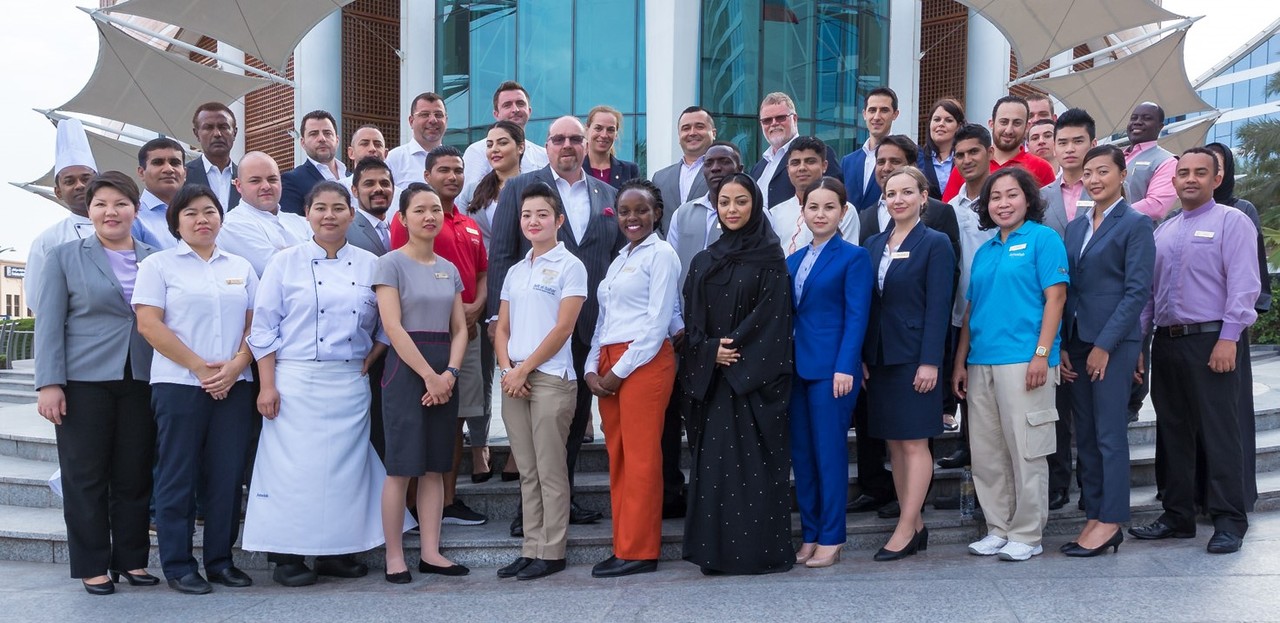
According to industry and government workforce data, more than 90% of employees in Dubai’s hospitality sector are expatriates, representing over 120 nationalities. In five-star and luxury hotels, that number effectively reaches 98–99%. There is no dominant service culture, no shared hospitality DNA, and no long-term workforce stability in the traditional sense.
Dubai does not operate hotels with local labor supported by expats.
Dubai operates hotels entirely through global workforce rotation.
The scale of internationalization in 2025
As of 2025:
- Dubai operates over 820 hotels with approximately 155,000 rooms
- Luxury and upper-upscale properties account for over 35% of total room inventory
- Average annual staff turnover in large hotels ranges between 38% and 62%
- In mega-resorts and lifestyle hotels, full team renewal occurs every 12–18 months
- More than 60% of operational staff speak English as a second or third language
- Management teams are often distributed across 3–5 nationalities per department
This means that training decay is built into the system.
Every SOP, brand standard, and service philosophy starts degrading the moment it is deployed — not because of poor intent, but because the workforce itself is in constant motion.
Traditional audits are blind to this reality.
2030 outlook: more rooms, fewer stable teams
By 2030, Dubai is projected to exceed:
- 1,100 hotels
- 200,000+ rooms
- A workforce approaching 450,000 hospitality employees
At the same time:
- Global competition for hospitality talent will intensify
- Visa cycles will shorten
- Younger workforce segments will show lower brand loyalty
- Multilingual service expectations will rise
- AI and automation will reduce headcount — but increase complexity per employee
The result is paradoxical:
Fewer people will handle more guest touchpoints, across more cultures, under higher brand pressure.
In this environment, human inconsistency becomes a financial risk, not an HR topic.
Case example: internationalization at extreme scale
To understand how this works in reality, consider Atlantis The Palm, one of the largest and most operationally complex hotels in the Middle East.
Key characteristics:
- Over 1,500 rooms
- Thousands of daily guests
- Staff from 100+ nationalities
- Dozens of restaurants, entertainment venues, and guest journeys running simultaneously
- Continuous onboarding cycles throughout the year
In such an environment:
- No single nationality defines service culture
- Brand consistency cannot rely on individual excellence
- Manual supervision is structurally insufficient
- Experience control must be systemic, not personal
Atlantis does not succeed because it hires better people.
It succeeds because process, data, and control frameworks absorb human variability.
This is the core lesson of internationalized hospitality.
Why internationalization directly impacts revenue
In 2025, guest expectations in Dubai are shaped by:
- Global travel frequency
- Exposure to top-tier brands worldwide
- Digital-first journeys
- Zero tolerance for friction
When workforce internationalization is unmanaged, hotels experience:
- Inconsistent check-in experiences
- Uneven upsell performance across shifts
- Service tone variation by nationality cluster
- Complaint handling gaps
- Review volatility
- Brand dilution without visible operational failure
These issues rarely appear in daily reports.
They appear months later as:
- ADR pressure
- OTA dependency
- Declining repeat ratios
- Rising acquisition costs
This is where Hotel Audit X10 operates.
How Hotel Audit X10 handles internationalized labor systems
Hotel Audit X10 does not audit people.
It audits how systems behave when people rotate.
Our methodology measures:
- Service consistency across national and cultural clusters
- Process stability under turnover pressure
- Digital touchpoint compensation for human variance
- Training survivability after staff replacement
- Revenue leakage caused by experience inconsistency
- Brand coherence delivered by multinational teams
In highly internationalized hotels, the question is not:
“Are our people good?”
The real question is:
“Does our system still perform when 40% of our people change?”
Hotel Audit X10 provides that answer.
The strategic reality toward 2030
By 2030, hotels that treat internationalization as an HR challenge will struggle.
Hotels that treat it as:
- an operational design problem
- a system architecture challenge
- a revenue protection mechanism
will dominate.
Dubai is not an exception.
It is a preview.
Why Hotel Audit X10 exists
In globalized hospitality, control no longer comes from hierarchy.
It comes from structure.
Hotel Audit X10 enables international hotels to scale cultural diversity without sacrificing brand consistency, guest trust, or revenue performance.
That is how hospitality survives globalization.
That is how premium brands remain premium.
Contact: