



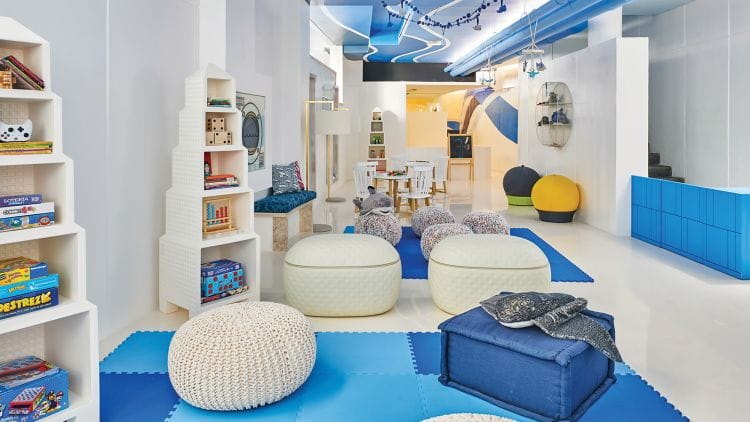
Hotels positioning themselves as family-oriented, especially those targeting families with young children, belong to one of the most operationally demanding segments in hospitality. These hotels do not sell rooms, design, or amenities alone – they sell peace of mind, safety, and relief for parents. This is precisely why Hotel Audit X10 approaches family hotels through a dedicated audit framework that measures how well a hotel is adapted in real operational terms, not just in marketing narratives.
In practice, the difference between hotels that label themselves as family friendly and those genuinely designed for families with children aged zero to six becomes visible very quickly. The audit evaluates the entire guest journey from a parent’s perspective – from the first website visit and booking flow, through arrival, room experience, and movement through shared spaces, to the use of facilities and the final departure. Every phase carries potential stress points or trust-building moments.
Within guest rooms, a family hotel must provide functionality without improvisation. Baby cots must be certified, safe, and available without additional procedures. Room layouts must allow easy movement with strollers and children’s equipment, while bathrooms must feature anti-slip flooring, safe fittings, and logical layouts. Socket covers, balcony protections, and glass safety measures are not added value – they are baseline standards.
Public areas quickly reveal the true level of family adaptation. Elevators that realistically cannot accommodate strollers, symbolic ramps, or unclear signage create friction within the first minutes of arrival. Well-developed family hotels clearly define zones for families with children and quieter areas for other guests, reducing conflicts and improving overall guest satisfaction.
Food and beverage is one of the most sensitive segments of the family experience. Parents with young children expect clearly structured kids buffets, child-height access, simple and healthy meals, and clearly marked allergens. Baby corners equipped with bottle warmers, sterilizers, and blenders are often decisive factors when choosing a hotel. Hotel Audit X10 specifically measures flexibility in meal times and the hotel’s understanding of children’s daily rhythms, which directly impacts family satisfaction.
Children’s activities and animation are areas where many hotels fail to evolve. In many cases, facilities exist but lack structure, age segmentation, and continuity. A kids club that functions merely as childcare does not create long-term value. The audit therefore evaluates certified playground safety, the quality of indoor facilities crucial for pre-season and bad-weather periods, and the educational value of children’s programs.
The evaluation of family hotels within the Hotel Audit X10 methodology is based on a Smart Scoring system with clearly defined weightings. Child safety carries the highest weight at thirty percent and covers everything from physical space safety to operational procedures across rooms, F&B, and shared areas. Operational adaptability for parents accounts for twenty-five percent and measures how simple, predictable, and stress-free the stay is. The quality of content and programs represents twenty percent of the score and focuses on the real value of children’s activities. The digital guest journey before arrival carries fifteen percent and evaluates how clearly and realistically the hotel answers parents’ questions in advance. Staff professionalism, weighted at ten percent, connects all elements into one coherent operational experience.
One of the most frequent weak points in family hotels, especially in the five-star category, is housekeeping. Standards are often designed for adult guests, while the specific needs of families are overlooked. Hotel Audit X10 regularly identifies insufficient deep cleaning of baby equipment, the use of fragrances and chemicals unsuitable for young children, and cleaning schedules that conflict with children’s daily routines. Visual cleanliness does not necessarily equal true hygienic safety.
For this reason, Hotel Audit X10 introduces dedicated family housekeeping protocols that include age-specific checklists, adapted cleaning procedures, staff training, and quality control through mystery audits. This segment frequently determines whether families return, even when a hotel appears luxurious on the surface.
The reason many family hotels fail to develop sustainably is rarely a lack of investment. More often, it is the absence of structured analysis. Decisions are made based on assumptions, seasonal pressure, or isolated guest comments, while the long-term value of families as repeat guests is underestimated.
Hotel Audit X10 helps hotels clearly identify where parental trust is lost, how to extend the season through the family segment, and how to increase direct bookings through transparent, accurate, and realistic communication of what the hotel truly offers.
In conclusion, hotels designed for families with young children require a higher level of operational maturity than traditional leisure hotels. Those that understand families are not seeking classic luxury, but safety, predictability, and calm, build stronger reputations, higher loyalty, and more stable long-term revenue.