



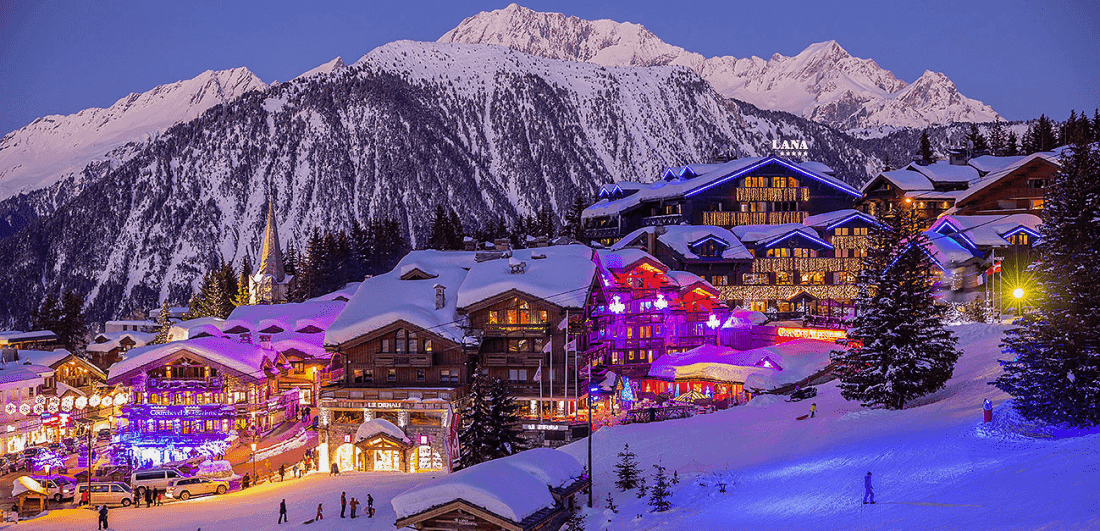
Alpine ski resorts in Italy, Austria, and Switzerland have represented the pinnacle of premium hospitality for decades. Infrastructure is world-class, natural resources are unique, and pricing often sits at the very top of the European market. Yet in such a competitive environment, it has become clear that differentiation no longer lies in star ratings or the number of ski slopes, but in a resort’s ability to manage seasonality, added value, and the entire guest journey.
This is why Hotel Audit X10 was not developed as a generic hotel audit, but as the only audit application in the world specifically mapped and adapted for ski and bike resorts, with clearly separated yet strategically connected winter and summer business models.
Alpine resorts share one key characteristic – an extremely high concentration of revenue within a relatively short period. During peak season, a ski resort can generate up to 60 percent of its annual revenue in just 90 to 120 days. In such a model, every weakness in booking flow, communication, or ancillary services is not reflected in perception, but directly in euros.
Take Courchevel as an example. As part of the Les Trois Vallées ski area, it attracts more than 1.5 million skiers annually, while premium hotels regularly achieve winter ADRs exceeding EUR 900 per night. In this environment, additional services such as ski servicing, equipment drying, private ski lockers, and curated retail are not extras – they are expected standards. Hotels that fail to communicate and integrate these services into the booking and pre-arrival phases quickly lose revenue that competitors capture effortlessly.
A similar pattern can be seen in Livigno, a destination generating approximately 3 million overnight stays per year and widely recognised for its strong winter and summer dual-season model. Livigno demonstrates that a ski resort no longer lives on winter alone. The summer bike season is generating an increasing share of revenue, yet hotels that do not adapt their communication, packages, and ancillary services to the season often fail to monetise this potential. This is where Hotel Audit X10 creates a decisive advantage – the audit does not treat the resort as a single-season product, but maps ski and bike seasons as two distinct yet strategically connected business cycles.
In practice, this means the audit clearly identifies where revenue is lost in winter due to underutilised ski-related services, and where summer performance suffers from poor integration of bike services, storage areas, wash stations, maintenance facilities, or retail offerings. In Livigno, hotels that have structured bike packages and ancillary services report up to 20-25 percent higher guest spend during the summer months compared to properties offering accommodation only.
Austria’s Obertauern provides another strong example. With more than 1.7 million skier days per season and consistently high winter occupancy, the focus is no longer on attracting guests, but on increasing the value of each stay. Here, ancillary services become critical. Ski servicing, heated ski rooms, equipment drying, and the sale of professional gloves, helmets, and goggles can generate an additional EUR 40-80 per guest per day – but only if these services are clearly positioned and operationally optimised.
Hotel Audit X10 does not analyse these services in isolation. The application maps them as part of a unified “ski-ready” or “bike-ready” experience and connects them with the website, booking engine, pre-arrival communication, and on-property operations. As a result, resorts do not sell individual services, but peace of mind, convenience, and performance.
The key distinction of the Hotel Audit X10 approach is that the outcome is not a static report, but a development model. Owners and management teams gain a clear understanding of where revenue is lost during the winter season, where the summer bike season is underperforming, and how the same infrastructure can be transformed into a dual-season profit engine.
For Alpine ski and bike resorts, auditing is no longer a tool for status checks – it has become an instrument of value management. In a market where luxury is merely the entry requirement, true differentiation lies in details, decision speed, and a resort’s ability to transform each season into a clearly structured, profitable experience.
For a discussion about the potential of your ski or bike resort and a tailored Hotel Audit X10 model, contact us at [email protected].